Trenching on the Central Coast
Before a trench is dug on the Central Coast, whoever manages or controls the site must take all reasonable steps to get current information about the underground services there. A trench at least 1.5 metres deep then has to be secured from unauthorised or accidental entry, and its sides shored, benched or battered.
Thanks — we have your enquiry. Someone will be in touch shortly. Prefer to talk now? Call (02) 4326 8289.
What trenching on the Central Coast actually involves
That support rule has one exception: written advice from a geotechnical engineer that the sides are safe from collapse, for a stated period. SafeWork's excavation code adds that support should be used at any depth where a worker going in could be buried, and it singles out hard, compact ground as the kind that causes the most trouble, because the face looks good. A wedge of sand over a one-metre length of trench 2 metres deep weighs about three tonnes, and the code says no worker should be in a trench more than 1.5 metres deep unless support has been installed.
Services, and the safety statement
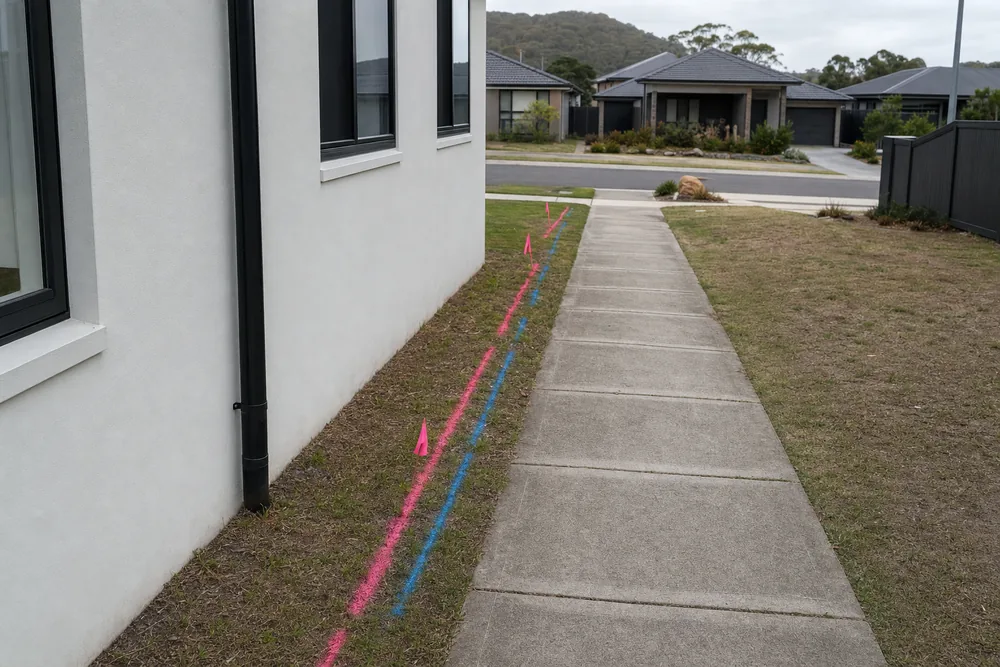
Construction work in an area where powered mobile plant moves is high risk construction work under the WHS Regulation, whatever the depth, and the business doing it must have a safe work method statement before starting; ask whether one has been prepared. Before You Dig Australia asks for an enquiry at least a business day before work and its plans are free, but they leave out private lines.
A trench across the nature strip or the road is on Council's road reserve, which needs a Road Opening Permit; Council usually processes a straightforward application within 14 days. Where a dig needs development consent, NSW electricity law also requires the underground cable information to be requested no more than 30 days before the work starts.
Excavation costs and rules check
Trenching on the Central Coast — common questions
Does a homeowner have to lodge the Before You Dig enquiry?
The WHS duty to get services information is written for a business that manages or controls the work site, and the Act's definition leaves out the occupier of a home that isn't used for a business. Before You Dig still lists homeowners among those who should lodge a free enquiry, and you are the one who knows where private lines run.
What if the trench turns up asbestos?
SafeWork's excavation code says asbestos can be met underground, in old water pipes, telecommunications pits or the ground itself, and disturbing it makes the work high risk construction work. Tell the provider about any buried sheeting or old pipes you know of before digging starts.
Is a drainage trench licensed work?
It can be. NSW counts agricultural drainage built to carry water away from a house's footings or a retaining wall as part of the dwelling, so digging for it is residential building work once the job is worth more than $5,000.
Trenching by suburb
- Excavation in Umina Beach
- Excavation in Bateau Bay
- Terrigal
- Wyoming
- Excavation in Woy Woy
- Excavation in Berkeley Vale
- Gorokan
- Narara
- Excavation in Hamlyn Terrace
- Killarney Vale
- Green Point
- Excavation in Blue Haven
- Excavation in Lake Munmorah
- Excavation in Wamberal
- Kincumber
- Excavation in Woongarrah
- Excavation in Gwandalan
- Gosford
Ready to get your trenching job quoted?
Free quote, one local provider, no obligation.
Last reviewed · Updated · First published