Pool Excavation on the Central Coast
An in-ground pool on the Central Coast needs approval before the hole is dug, either a complying development certificate or a development application, because the only pool that is exempt is a portable one of 2,000 litres or less. Where Council's sewer runs through the yard then decides where the hole can go.
Thanks — we have your enquiry. Someone will be in touch shortly. Prefer to talk now? Call (02) 4326 8289.
What pool excavation on the Central Coast actually involves
Under the Housing Code, a pool approved as complying development has to sit behind the building line, with its water line at least 1 metre from side and rear boundaries. The dig is capped at 1 metre deep within 1 metre of a boundary, 2 metres up to 1.5 metres in and 3 metres beyond, and at 1 metre anywhere on Class 3 or 4 acid sulfate land or within 40 metres of a natural waterbody. A child-resistant barrier has to surround the work while the pool is built.
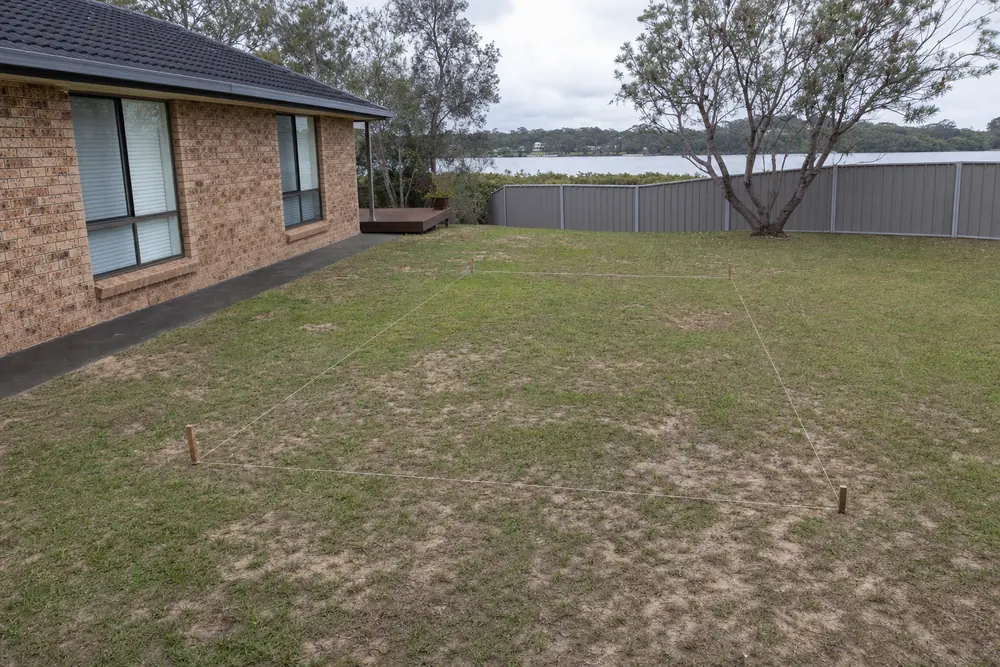
The sewer and the hole
Council's procedure for building near its water and sewer assets won't allow an in-ground pool over or close to a water main, a pressure sewer or a sewer main wider than 300 millimetres. Near an ordinary gravity sewer, a pool must be at least 1.5 metres from a manhole, with its coping at least 150 millimetres above the lid, and at least 600 millimetres from the coping to the pipe. A concrete pool inside the sewer's zone of influence has to be founded below it, on piers for example, and because a fibreglass shell can't sit partly on piers, the main may need concrete encasement reaching a metre past the pool.
SafeWork's excavation code names water rushing into an excavation as a hazard, controlled with pumps, and saturated ground adds load to the sides of a hole. Pumping groundwater out so work can continue is dewatering, which can need WaterNSW approvals unless an exemption applies, and on acid sulfate land, lowering the watertable is itself one of the works Council's consent rule counts.
Excavation costs and rules check
Pool Excavation on the Central Coast — common questions
Does the finished pool go on a register?
Yes. The owner of premises with a swimming pool must make sure it is entered on the NSW Swimming Pool Register, either directly or through Council.
What does Council charge to certify a pool?
When Council is the certifier, its 2026-27 fee for a swimming pool complying development certificate is $1,583.45 including GST. A private certifier can issue the certificate instead, at its own price, and certifying the pool is a separate cost from digging it.
Does Council hold a bond on a pool job?
Yes. Council takes a security deposit against damage to the road, kerb and footpath next to residential work, including work under a certificate from a private certifier, and for a swimming pool the minimum is $3,250, excluding GST.
Pool Excavation by suburb
- Excavation in Umina Beach
- Excavation in Bateau Bay
- Terrigal
- Wyoming
- Excavation in Woy Woy
- Excavation in Berkeley Vale
- Gorokan
- Narara
- Excavation in Hamlyn Terrace
- Killarney Vale
- Green Point
- Excavation in Blue Haven
- Excavation in Lake Munmorah
- Excavation in Wamberal
- Kincumber
- Excavation in Woongarrah
- Excavation in Gwandalan
- Gosford
Ready to get your pool excavation job quoted?
Free quote, one local provider, no obligation.
Last reviewed · Updated · First published