Clean soil from a dig still costs $244.07 a tonne to tip on the Central Coast
By Artigellence ·
Central Coast Council charges $244.07 a tonne, GST included, to take clean excavated soil at its tips, and it accepts none without a Waste Classification Certificate. If a quote for a pool, a site cut or a trench doesn't say who classifies the spoil and who pays to tip it, ask before you sign.
Call (02) 4326 8289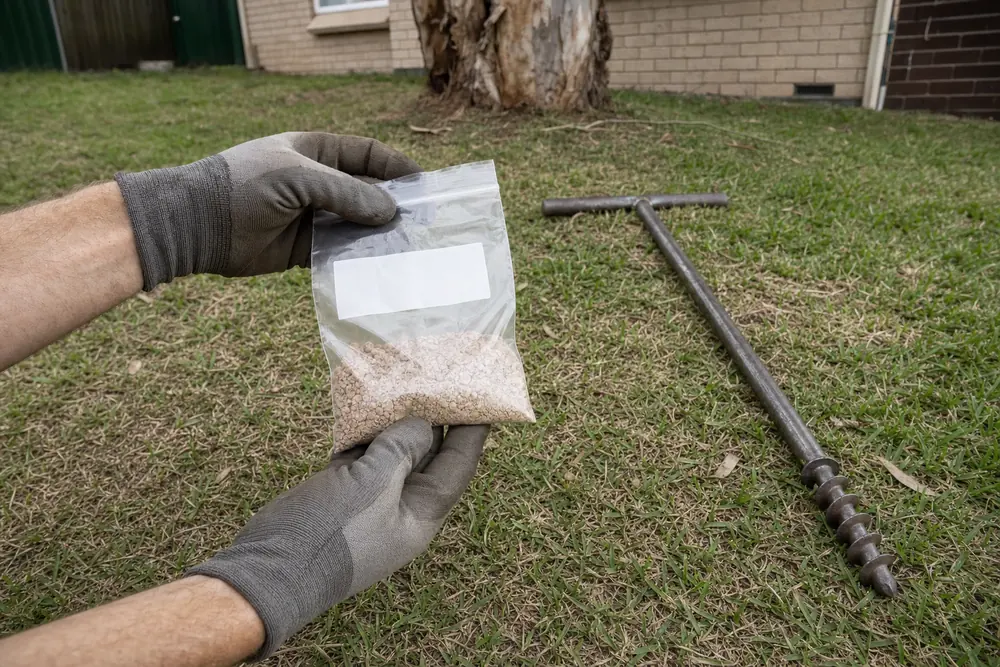
What Council charges for a load of spoil
Council's fees and charges for 2026/27 list clean excavated soil as a stream of its own. The line reads $244.07 a tonne including GST, made up of $221.88 and $22.19 in GST, and it covers soil that is not contaminated and counts as excavated natural material or virgin excavated natural material. The note printed under it says all soil material must have a Waste Classification Certificate to be accepted.
Soil is on Council's list of waste taken for a fee at its Woy Woy and Buttonderry facilities. It is not on the free list, which is mostly scrap metal, packaging, batteries and electronics.
The same page says Council's tip fees include its liability for the NSW EPA waste levy, which it states as $180.20 a tonne plus GST where applicable. Clean bricks, roof tiles, pavers and concrete are listed a few lines above soil at $243.00 a tonne.
The certificate matters more than the rate
The rate only applies to soil that qualifies, and that is decided before the truck leaves the site. The EPA's guidance on virgin excavated natural material says the generator of the material must assess the past and present activities on the site and on the land around it. Testing is not mandatory, but the EPA says it may be needed to show the material is not contaminated.
The EPA's own list of land uses that can leave contaminants in excavated material includes agricultural and horticultural activities and engine works. It is fair to ask a provider what they would do if the spoil from your job turned out not to qualify. That soil is no longer the $244.07 stream, and its price depends on how it is classified.
Woy Woy's sand and the acid sulfate question
The legal definition the EPA quotes rules out any material containing sulfidic ores or soils. Its guidance tells whoever is digging to check the Acid Sulfate Soil Risk Maps first, and says material cannot be classified as virgin excavated natural material where those maps show a probability of acid sulfate soils, unless it has been chemically assessed under the state's guidelines. You can ask to see the maps at Council.
Council's planning map for acid sulfate soils, which decides when digging needs development consent, puts most of the suburb's residential land in Class 3. The EPA's test names a different set of maps, so the class on Council's map does not settle whether your spoil qualifies. It is a good reason to look at the risk maps before a pool or a deep trench is priced as if the soil will go to the tip as clean fill.
Keep the soil and the concrete apart
Mixed waste, which Council's schedule says includes building and demolition waste, is listed at $468.15 a tonne. If a site cut also breaks up an old path or a slab, ask whether the concrete will be kept out of the soil. Council prices the two as separate streams, and its schedule gives no rate for soil mixed with rubble.
Artigellence is the marketing business that operates this site and writes its articles. It does not carry out the work described.
Thanks — we have your enquiry. Someone will be in touch shortly. Prefer to talk now? Call (02) 4326 8289.
Last reviewed · First published